
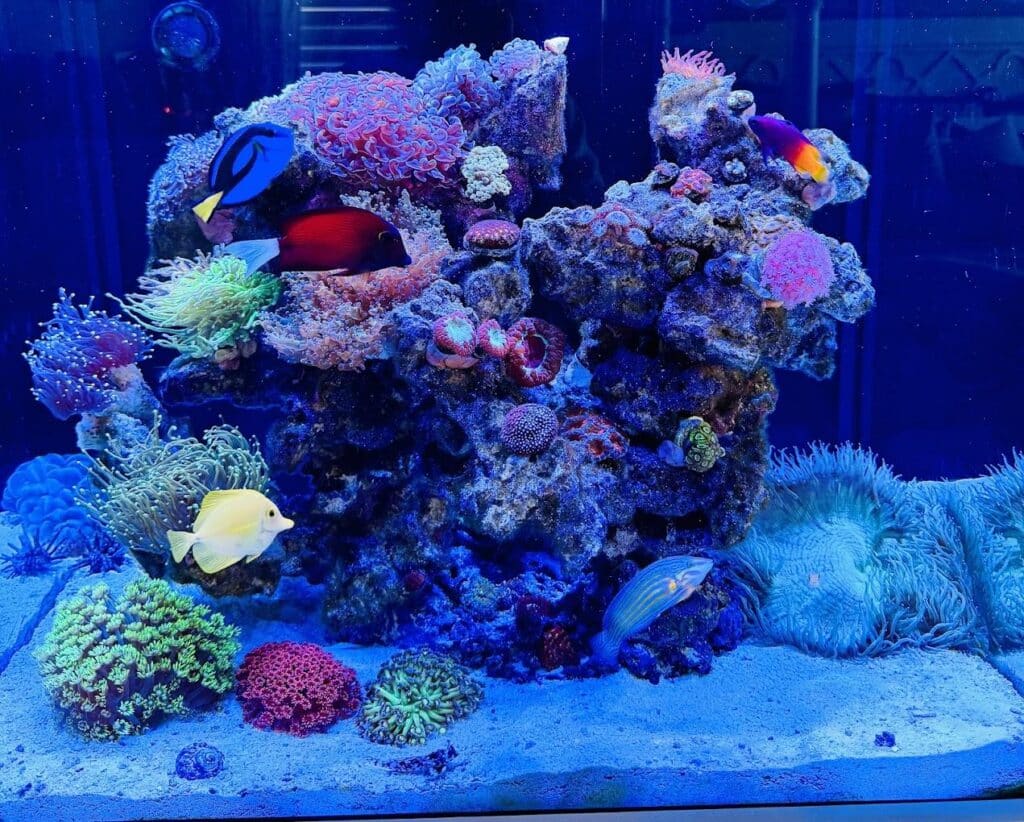
You don’t need a wall-sized aquarium to enjoy a living reef. A nano reef tank packs corals, invertebrates and a few small fish into a compact footprint that fits on a desk, a counter or a reception area. Small reefs come with their own challenges, though. Here’s what a nano reef tank is, what makes it rewarding, and how to keep one healthy.
Key Takeaways
- A nano reef tank is a small saltwater reef aquarium, often described as under about 30 gallons.
- Small tanks fit homes, apartments and offices where space is tight.
- Less water means conditions change faster, so stability takes more attention.
- Choose hardy corals and a small number of fish suited to the tank’s size.
- Regular professional maintenance makes small reefs much easier to keep.
What Is a Nano Reef Tank?
A nano reef tank is a compact saltwater aquarium set up to keep corals, invertebrates and small fish. Definitions vary, but nano reefs are often described as tanks under about 30 gallons. Many use all-in-one designs with filtration built into a hidden rear chamber, which keeps the setup clean and simple.
Despite their size, nano reefs can be stunning. A well-planned coral reef tank in miniature can show the same color and movement as a much larger system.
Pros and Challenges of Small Reefs
What people love:
- Fits where a large tank can’t
- Lower upfront cost for equipment, rock and livestock
- Easy to view up close, which makes small corals and invertebrates stand out
What to plan for:
- Less water means temperature, salinity and water quality can change quickly
- Evaporation has a bigger effect on salinity in a small tank
- Fewer fish fit comfortably, so stocking needs to be careful
In other words, small doesn’t mean simple. Stability is the main challenge, and it’s why consistent care matters so much.
What Equipment Does a Nano Reef Need?
A nano reef needs the same basics as a large reef, just scaled down:
- Lighting: corals rely on algae living in their tissue that need light to make food, as NOAA explains, so a quality reef light is essential.
- Heater: reef-building corals do best in warm, steady water. A reliable, correctly sized heater keeps the temperature stable.
- Water movement: a small powerhead or return pump keeps water circulating and brings food to corals.
- Filtration: many nano reefs use built-in rear chambers for filter media, while others add a small sump.
- Testing tools: a refractometer for salinity and basic water tests help you spot changes early.
- Top off: because evaporation affects salinity faster in a small tank, many owners top off daily or use an automatic top off system.
Choosing quality equipment from the start saves headaches later, since one failing heater or pump has a bigger effect on a small tank.
Best Spots for a Nano Reef in a Home or Office
Good locations share a few traits:
- Away from windows, heating vents and air conditioning drafts
- On a sturdy, level surface or stand rated for the filled weight
- Near a protected outlet, with room for drip loops on power cords
- Somewhere you’ll see it every day, like a kitchen, home office or reception desk
In offices, a nano reef can be a conversation piece without taking over the room. Our commercial aquarium services cover setups for workplaces of every size.
Corals and Fish That Suit Nano Reefs
Start with hardy, forgiving livestock. Many soft corals and some LPS corals adapt well to small tanks, and a small cleanup crew of snails and hermit crabs helps manage algae. For fish, choose a few small, peaceful species that stay small as adults.
Avoid fish that grow large or need lots of swimming room. Our team can help match livestock to your tank, and you can browse what we carry on our live stock page. If you’re shopping for corals and supplies, our post on finding a reef aquarium store explains what to look for.
Professional Setup and Maintenance
Because small reefs change quickly, a regular care routine makes all the difference. Professional maintenance keeps water changes, testing and equipment checks on schedule so problems are caught early.
Armco Aquatics offers weekly, biweekly and monthly maintenance plans. Every visit includes water testing, algae removal, filter and water changes, a health evaluation and preventive equipment maintenance. For a larger statement piece, our residential aquarium team designs custom reefs of any size.
Frequently Asked Questions
What size is a nano reef tank?
Nano reefs are often described as reef tanks under about 30 gallons, though definitions vary.
Are nano reef tanks good for beginners?
They can be, with hardy corals and a steady care routine. Small water volume makes stability harder, so regular maintenance is important.
How many fish can go in a nano reef tank?
Only a few small, peaceful species. Overstocking a small tank quickly affects water quality.
Do nano reef tanks need a protein skimmer?
Not always. Many small tanks rely on regular water changes instead, but it depends on the stocking and setup.
Start Your Nano Reef With Armco Aquatics
Armco Aquatics designs, installs and maintains reef aquariums for homes and businesses across Delaware, Pennsylvania, New Jersey and Maryland. Whether you want a small reef for your desk or a showpiece for your living room, call us at 302.655.1150 or contact Armco Aquatics to schedule a consultation.
Leave a Reply