
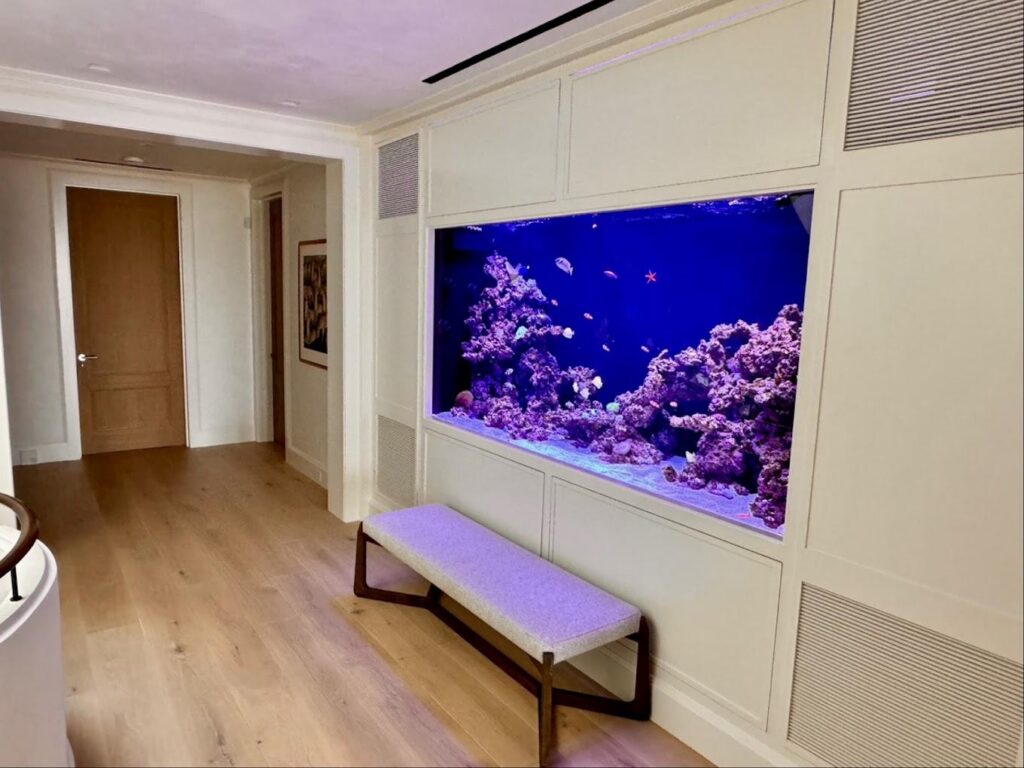
Finding water under your aquarium is stressful. Whether it’s a slow drip from a seam or a puddle that keeps growing, a fish tank leaking needs fast, calm action to protect your fish, your floors and your electrical equipment. Here’s what to do in the first few minutes, how to track down the source, and how to decide whether the tank can be repaired or should be replaced.
Key Takeaways
- Unplug aquarium equipment before you touch the water or the tank.
- Lower the water level below the leak and move fish into clean containers filled with their own tank water.
- Keep filter media wet so the beneficial bacteria survive.
- Small seam leaks can sometimes be resealed, but older or larger tanks are often safer to replace.
- A professional can assess the tank, the stand and the floor before anything is refilled.
What Should You Do the Moment You Find a Leak?
Start with safety. Unplug heaters, filters, lights and pumps before reaching into the tank, because water and electricity are a dangerous mix. Then lower the water level so it sits below the leak, and protect the floor with towels. Once the leak has slowed, you can focus on the fish.
Aquarium equipment should be plugged into outlets with ground fault protection. A GFCI outlet shuts off power quickly when it senses current going where it shouldn’t, which is exactly the situation a leak creates. If yours aren’t protected, it’s worth having an electrician add that protection before the tank goes back into service.
Here’s a simple order of operations:
- Unplug all equipment at the outlet.
- Siphon water into clean buckets until the level is below the leak.
- Move fish into clean, food-safe containers filled with tank water.
- Add a battery-powered air pump if fish will be out of the tank for more than a short time.
- Place filter media in a container of tank water so it stays wet.
How Do You Find Where a Fish Tank Is Leaking?
Most leaks come from a silicone seam, a crack in the glass, or the plumbing and equipment around the tank. Dry the outside of the tank completely, then look and feel along every seam, corner and bulkhead for fresh moisture. A dry paper towel run along the seams will often show you the exact spot.
Before you blame the tank, rule out the usual suspects:
- A canister filter hose or fitting that has loosened
- A sump or overflow that is overflowing rather than leaking
- Condensation or splash from the lid or a powerhead aimed at the surface
- Water traveling down a cord and dripping off the stand
If the water is coming from a seam or the glass itself, the tank needs attention before it holds water again.
Can a Leaking Aquarium Be Resealed?
Sometimes. Aquarium resealing means fully draining the tank, cutting out the old silicone, cleaning the glass, applying new aquarium-safe silicone and letting it cure before testing. On a small tank with a single failed seam, that can be a reasonable fix.
On older or larger tanks, resealing is more of a gamble. Silicone ages, and when one seam fails the others may not be far behind. A reseal also doesn’t fix chipped glass, a warped frame or a stand that is no longer level. For tanks that hold hundreds of gallons, the cost of a second failure is a lot of water on your floor.
When Is Replacing the Tank the Better Call?
Replacement usually makes sense when:
- The tank is cracked or the glass is chipped near a seam.
- Several seams show peeling, cloudy or separating silicone.
- The tank is older and has been moved more than once.
- The stand shows water damage, swelling or sagging.
- You were already thinking about a bigger or better tank.
A leak can also be a chance to upgrade. Our team designs and builds custom aquariums for homes, and we also keep quality preowned aquariums on hand for owners who want a dependable replacement without a full custom build.
How Do You Keep Fish Safe While the Tank Is Down?
Your fish need stable temperature, oxygen and clean water while the tank is out of service. Keep them in their own tank water, add a heater and an air pump to the holding container if the downtime will stretch past a day, and feed lightly to keep waste down.
Keep the filter media wet in tank water as well. That media holds the beneficial bacteria that break down fish waste, and protecting it makes it much easier to restart the system. If the tank needs to come out of your home or office entirely, our aquarium moving services handle fish, equipment and the tank itself.
How Can You Prevent Future Leaks?
Most leaks give a little warning if you know where to look. A few habits help you catch problems early:
- Look along the seams and corners every few weeks for peeling, bubbling or cloudy silicone.
- Keep the stand level and dry, and wipe up spills so wood doesn’t swell.
- Use drip loops on every power cord so water can’t run down into an outlet.
- Avoid moving a filled tank, even a few inches, since that twists the seams.
- Have older or larger tanks looked at during routine service.
Tanks on one of our weekly, biweekly or monthly maintenance plans get a trained set of eyes on them regularly, which makes it much more likely that a weak seam is spotted before it becomes water on the floor.
Frequently Asked Questions
Is it safe to leave fish in a leaking tank?
Only briefly, and only if you can lower the water below the leak. A seam that is leaking can fail further without warning, so moving fish into clean containers with their own tank water is the safer choice.
How long does aquarium silicone last?
It varies with the tank’s age, size, water chemistry and how often it has been moved. There is no fixed lifespan, which is why seams on older tanks deserve a regular look.
Can I fix an aquarium leak without draining it?
Patching the outside of a seam while the tank is full rarely holds. A lasting repair means draining the tank and resealing the seam properly, or replacing the tank.
Should I reseal or replace my fish tank?
A small, newer tank with one failed seam may be worth resealing. Older tanks, large tanks and anything with cracked glass are usually better replaced.
Get Help From Armco Aquatics
If your fish tank is leaking, Armco Aquatics can help you figure out the safest next step, from moving your fish and tank to designing a replacement that fits your space. Our team designs, installs and maintains aquariums across Delaware, Pennsylvania, New Jersey and Maryland. Call us at 302.655.1150 or contact Armco Aquatics to schedule a consultation.
Leave a Reply